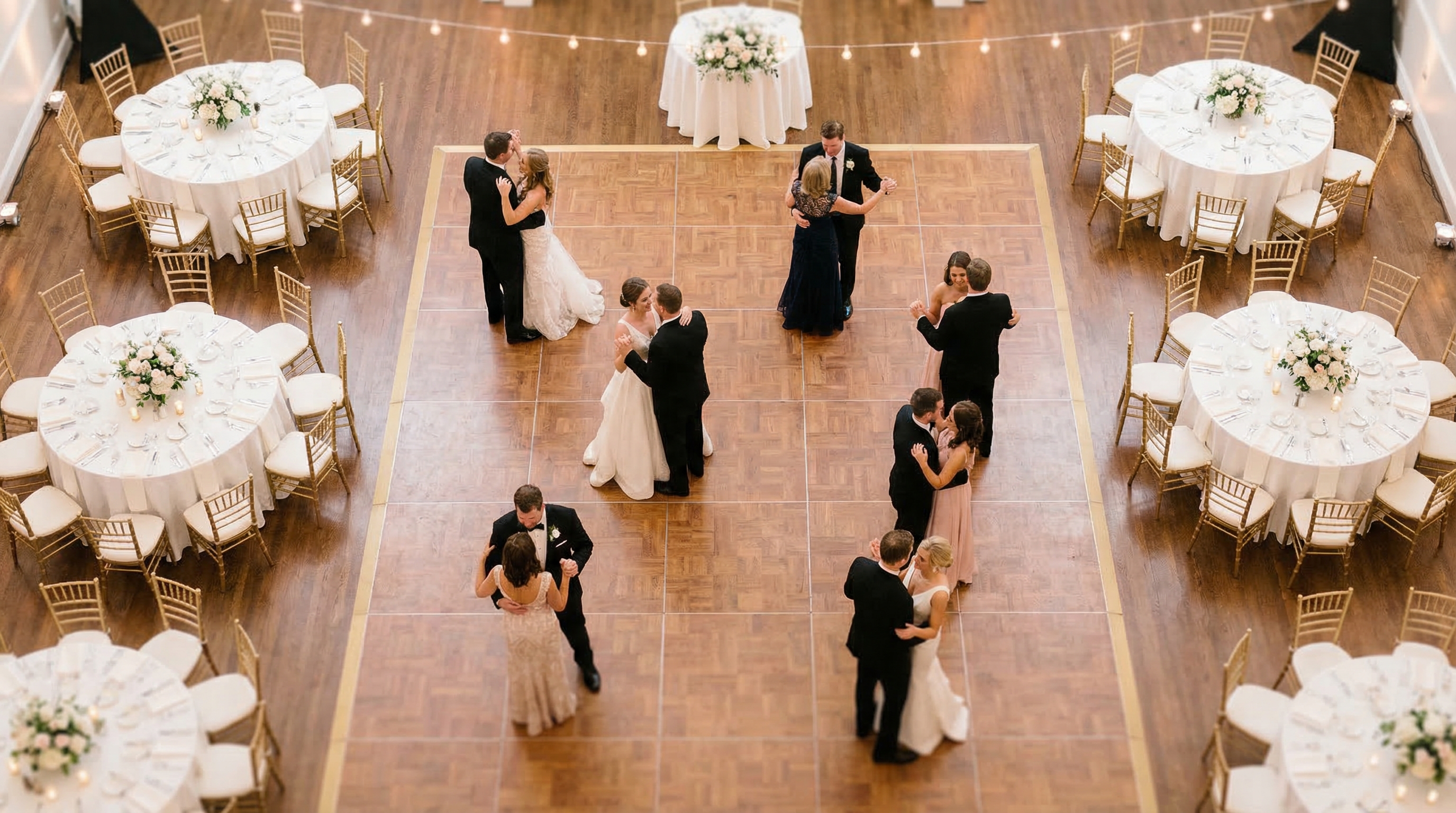
Finally — a Dance Floor Dimensions Guide That Makes Sense
Planning an event? You're probably thinking about the music, the food, and the overall vibe. But have you considered the dance floor? The dance floor is more than just a space to bust a move; it's a focal point that can make or break the energy of your event. Getting the dance floor dimensions right is crucial to ensuring your guests have enough room to comfortably dance the night away without feeling cramped. This guide will walk you through everything you need to know about selecting the perfect dance floor size for your event, from estimating the number of dancers to considering the shape and placement of the floor.
Don't let a too-small or too-large dance floor be the reason your event falls flat. Let's dive in and make sure your dance floor is perfectly sized for an unforgettable experience. And remember, planning your event layout is easy with EventFloorPlanner.com. Our free, drag-and-drop tool makes visualizing your space simple!
Key Takeaways
- Accurately estimate the number of guests who will likely dance.
- Choose a dance floor shape that complements your venue and event style.
- Consider the placement of the dance floor in relation to other event elements.
- Utilize online tools like EventFloorPlanner.com to visualize your layout.
Why Dance Floor Dimensions Matter
So, why all the fuss about dance floor dimensions? It's simple: the size of your dance floor directly impacts the enjoyment of your guests and the overall success of your event. Picture this: a dance floor that's too small, and your guests are packed like sardines, unable to move freely. On the other hand, a dance floor that's too large can feel empty and uninviting, discouraging people from dancing altogether.
The right size dance floor creates a comfortable and inviting atmosphere, encouraging guests to let loose and have a good time. It also affects the flow of your event, ensuring that the dance floor doesn't feel like an afterthought but rather an integral part of the celebration. Consider the type of event you're hosting. A wedding might need a larger dance floor to accommodate traditional dances and a wide range of guests, while a corporate event might require a smaller, more intimate space.
Ultimately, choosing the right dance floor dimensions is about creating an environment where your guests feel comfortable and encouraged to participate. It's about setting the stage for a memorable and enjoyable experience. Poorly planned dance floor sizes and layouts can negatively impact guest experience. Don't let that happen!
Estimating the Number of Dancers
One of the most crucial steps in determining the right dance floor dimensions is estimating the number of guests who will actually dance. This isn't about counting every single person at your event; it's about realistically assessing how many people are likely to hit the dance floor at any given time. A good rule of thumb is to estimate that 30-50% of your guests will dance regularly.
Consider your guest list and the type of event you're hosting. Are you planning a wedding with a lot of young, energetic guests? You might lean towards the higher end of that percentage. Or is it a more formal corporate event where people might be less inclined to dance? In that case, the lower end might be more accurate. Cultural factors can also play a role. Some cultures are known for their enthusiastic dancing, so you'll want to adjust your estimate accordingly.
Once you have a rough estimate of the number of dancers, you can start to calculate the appropriate dance floor size. Remember, it's always better to err on the side of slightly larger than too small. A little extra space is always appreciated! You can use EventFloorPlanner.com's venue capacity calculator to help you estimate how many people your venue can hold comfortably, and then adjust your dance floor size accordingly.
Calculating Dance Floor Size: The Formulas You Need
Now that you have an estimate of the number of dancers, it's time to crunch some numbers and determine the ideal dance floor dimensions. Here are a few formulas to help you get started:
- Formula 1: Square Footage per Dancer: A comfortable amount of space per dancer is generally considered to be 4.5 square feet.
- Formula 2: Total Dance Floor Area: Multiply the number of expected dancers by 4.5 square feet. This will give you the total square footage needed for your dance floor.
For example, if you expect 100 people to dance, you would calculate: 100 dancers * 4.5 sq ft/dancer = 450 square feet. This means you'll need a dance floor that's approximately 450 square feet. You can then work with these dimensions to select the best actual floor size for your venue. But what about irregular venue shapes?
Don't forget to consider the shape of your dance floor. Square and rectangular dance floors are the most common, but you can also opt for a circular or custom-shaped dance floor to fit your venue's unique layout. Just remember to adjust your calculations accordingly to ensure you have enough space for everyone to dance comfortably. With EventFloorPlanner.com's drag-and-drop interface, you can easily experiment with different dance floor shapes and sizes to see what works best in your space.
Step-by-Step: Planning Your Dance Floor Layout
Ready to put your calculations into action? Here's a step-by-step guide to planning your dance floor layout:
Measure Your Venue
Start by taking accurate measurements of your venue space. Pay attention to any obstacles like columns, doorways, or permanent fixtures that might impact your dance floor placement.
Determine Dance Floor Placement
Consider where the dance floor will be located in relation to other key elements like the stage, DJ booth, bar, and seating areas. The dance floor should be easily accessible and visible to all guests.
Choose Your Dance Floor Shape and Size
Based on your calculations and venue layout, select the appropriate shape and size for your dance floor. Use EventFloorPlanner.com to visualize different options and ensure everything fits comfortably.
Mark the Dance Floor Area
Use tape or other markers to physically outline the dance floor area in your venue. This will give you a better sense of the space and help you identify any potential issues.
Finalize Your Layout
Once you're happy with the dance floor placement and size, finalize your layout and communicate it to your vendors. This will ensure everyone is on the same page and can execute your vision flawlessly.
By following these steps, you can create a dance floor layout that is both functional and visually appealing. Remember to prioritize guest comfort and create an inviting atmosphere that encourages people to dance the night away.
Tips for Maximizing Your Dance Floor Space
Even with careful planning, you might find yourself working with limited space. Here are some tips for maximizing your dance floor space:
- Optimize Seating: Choose seating arrangements that are space-efficient. Consider using banquet-style seating or cocktail tables to accommodate more guests without taking up too much room.
- Utilize Vertical Space: Decorate upwards to draw the eye and create a sense of spaciousness. Use tall centerpieces, hanging decorations, or uplighting to add visual interest without crowding the dance floor.
- Create Flow: Ensure that there is a clear path from the seating areas to the dance floor. Avoid creating bottlenecks or obstacles that might discourage people from dancing.
Another great way to maximize your dance floor space is to consider multi-functional furniture. For example, you could use ottomans or benches that can be easily moved to create more space on the dance floor when needed. Remember, the goal is to create a flexible and adaptable space that can accommodate different activities and guest needs throughout the event.
Dance Floor Shape and Style: What to Consider
The shape and style of your dance floor can significantly impact the overall aesthetic of your event. While square and rectangular dance floors are the most common, there are other options to consider:
- Circular Dance Floors: These can create a more intimate and romantic atmosphere, perfect for weddings or smaller gatherings.
- Custom-Shaped Dance Floors: If you have a unique venue layout, a custom-shaped dance floor can be a great way to maximize space and create a one-of-a-kind look.
In addition to shape, consider the style of your dance floor. Do you want a classic wooden dance floor, a modern acrylic dance floor, or something more unique? The style of your dance floor should complement the overall theme and décor of your event. For example, a rustic wedding might call for a reclaimed wood dance floor, while a sleek corporate event might benefit from a polished acrylic dance floor.
Don't be afraid to get creative and think outside the box. The dance floor is an opportunity to make a statement and add a personal touch to your event. Use EventFloorPlanner.com's free templates to explore different layout options and visualize your dance floor in your venue.
Dance Floor Examples: Real-World Scenarios
Let's look at some real-world examples to illustrate how to choose the right dance floor dimensions:
- Example 1: Small Wedding (50 Guests): With 50 guests and an estimated 25 dancers (50%), you'll need approximately 112.5 square feet. A 10' x 12' dance floor (120 square feet) would be ideal.
- Example 2: Corporate Event (150 Guests): With 150 guests and an estimated 45 dancers (30%), you'll need approximately 202.5 square feet. A 14' x 16' dance floor (224 square feet) would be a good fit.
- Example 3: Large Wedding (200 Guests): With 200 guests and an estimated 100 dancers (50%), you'll need approximately 450 square feet. A 20' x 22' dance floor (440 square feet) would be suitable.
These are just examples, of course. Remember to adjust your calculations based on your specific guest list, event type, and venue layout. It's always better to have a little extra space than not enough!
Common Mistakes to Avoid
Choosing the right dance floor dimensions can be tricky, and there are several common mistakes to avoid:
- Underestimating the Number of Dancers: Be realistic about how many of your guests will actually dance. It's always better to overestimate than underestimate.
- Ignoring Venue Obstacles: Make sure to account for any columns, doorways, or other obstacles that might impact your dance floor placement.
- Forgetting About Flow: Ensure that there is a clear and easy path from the seating areas to the dance floor.
Another common mistake is failing to consider the type of music that will be played. If you're planning on playing high-energy music, you'll need a larger dance floor to accommodate more dancers. On the other hand, if you're planning on playing more mellow music, a smaller dance floor might be sufficient.
Expert Tips for Dance Floor Success
Here are some expert tips to help you create a dance floor that your guests will love:
- Consider Lighting: Use lighting to create an inviting and energetic atmosphere on the dance floor. Uplighting, spotlights, and dance floor lighting can all help to set the mood.
- Choose the Right Music: Work with your DJ or band to create a playlist that will appeal to a wide range of guests and keep people dancing all night long.
- Encourage Participation: Get the party started by encouraging your guests to hit the dance floor. You can do this by playing popular songs, organizing group dances, or simply leading by example.
Ultimately, the key to a successful dance floor is to create an environment that is fun, inviting, and comfortable for your guests. By following these tips and avoiding common mistakes, you can ensure that your dance floor is a highlight of your event.
Before You Start
- Have a clear understanding of your venue's layout and dimensions.
- Know your guest count and estimate the number of dancers.
- Determine your event's style and theme.
Frequently Asked Questions
Written by
Event Floor Planner Team
Helping event planners create stunning floor plans and seating charts for weddings, corporate events, and special celebrations.
Stay in the Loop
Get expert event planning tips, layout ideas, and exclusive guides delivered weekly.
No spam. Unsubscribe anytime.
Related Articles
Finally — a Emergency Exit Planning Guide That Makes Sense
Finally — An Emergency Exit Planning Guide That Makes Sense Planning an event is more than just picking out decorations and choosing a menu. You've got to think about safety, too. A key part of a...

The Math Behind Perfect Chair Spacing Requirements (Simplified)
Unlock the Secret to Perfectly Spaced Seating: A Simple Guide to Chair Spacing Requirements Have you ever attended an event where you felt cramped and uncomfortable? Or perhaps you've organized an...
Real Yacht Event Setup Layouts From Real Events
Dreaming of a Yacht Event Setup? Let's Make Waves! Planning an event on a yacht? Picture this: gentle waves, stunning views, and a perfectly designed space for your guests to mingle and celebrate....