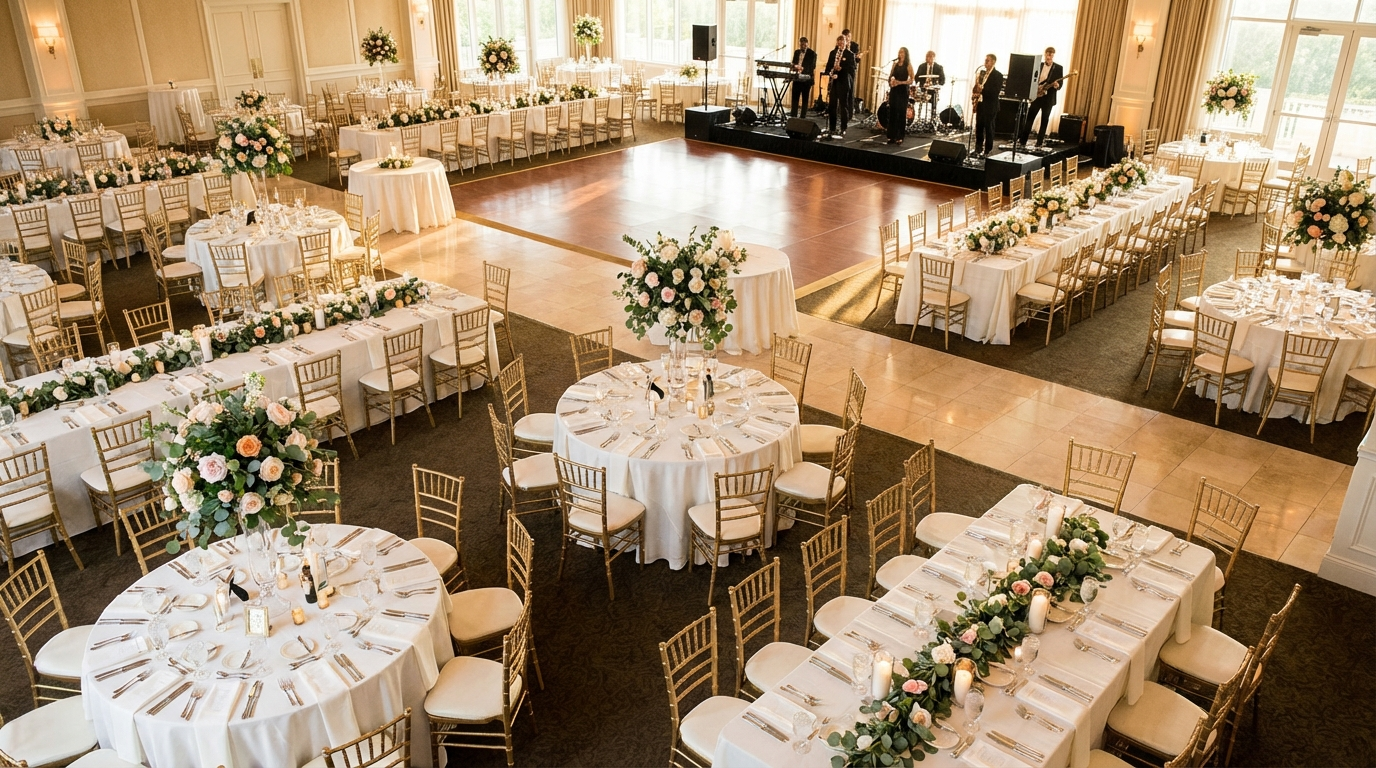
You booked the banquet hall. The date is set. And now you're staring at an empty room wondering… where does everything go?
Table placement can make or break your event. Too cramped and guests bump elbows. Too spread out and the room feels dead. The dance floor in the wrong spot? Nobody dances.
Here are proven banquet hall layouts for every event type — with actual spacing measurements so you get it right the first time.
The Universal Rules (Every Event)
Before we get into specific events, these rules apply to EVERY banquet hall setup:
- 5-6 feet between table edges — this gives enough room for chairs, guests standing, and servers passing
- 36 inches minimum for any aisle or walkway (ADA requirement)
- 60-inch round tables seat 8 comfortably — don't try to squeeze in 10
- 6-foot rectangular tables seat 6 (3 per side) or 8 if you use the ends
- Leave the center open — guests naturally flow through the middle of any room
💡 Pro Tip: Always start your layout by placing the fixed elements first: stage/DJ, bar, buffet stations, entrance/exit. Then fit tables around them. Never the other way around.
Wedding Reception Layout
Weddings need the most complex setup because you're managing dinner, dancing, speeches, and socializing — all in one room.
The Classic Wedding Setup
- Head/sweetheart table: Front and center, facing all guests
- Guest tables: 60-inch rounds, 8 per table, arranged in a grid or staggered pattern
- Dance floor: Between the head table and guest tables (minimum 15x15 feet for 100 guests)
- DJ/band: Adjacent to dance floor, against a wall
- Bar: Rear corner or side wall — away from the dance floor to reduce congestion
- Buffet: Along a side wall with 3 feet of space in front for the line
Space math: Allow 20 square feet per guest for a wedding with dining and dancing. A 3,000 sq ft hall comfortably holds 150 guests.
Related Reading
Want to compare head table vs sweetheart table? We have a full guide on that.
Pro Move: The Reveal Layout
Host your ceremony or cocktail hour in the same room, then flip it for dinner. Use a curtain or divider to hide the reception setup during cocktails. When dinner is announced, pull the curtain for a dramatic reveal. Guests walk into a fully decorated reception — instant wow factor.
Corporate Event Layout
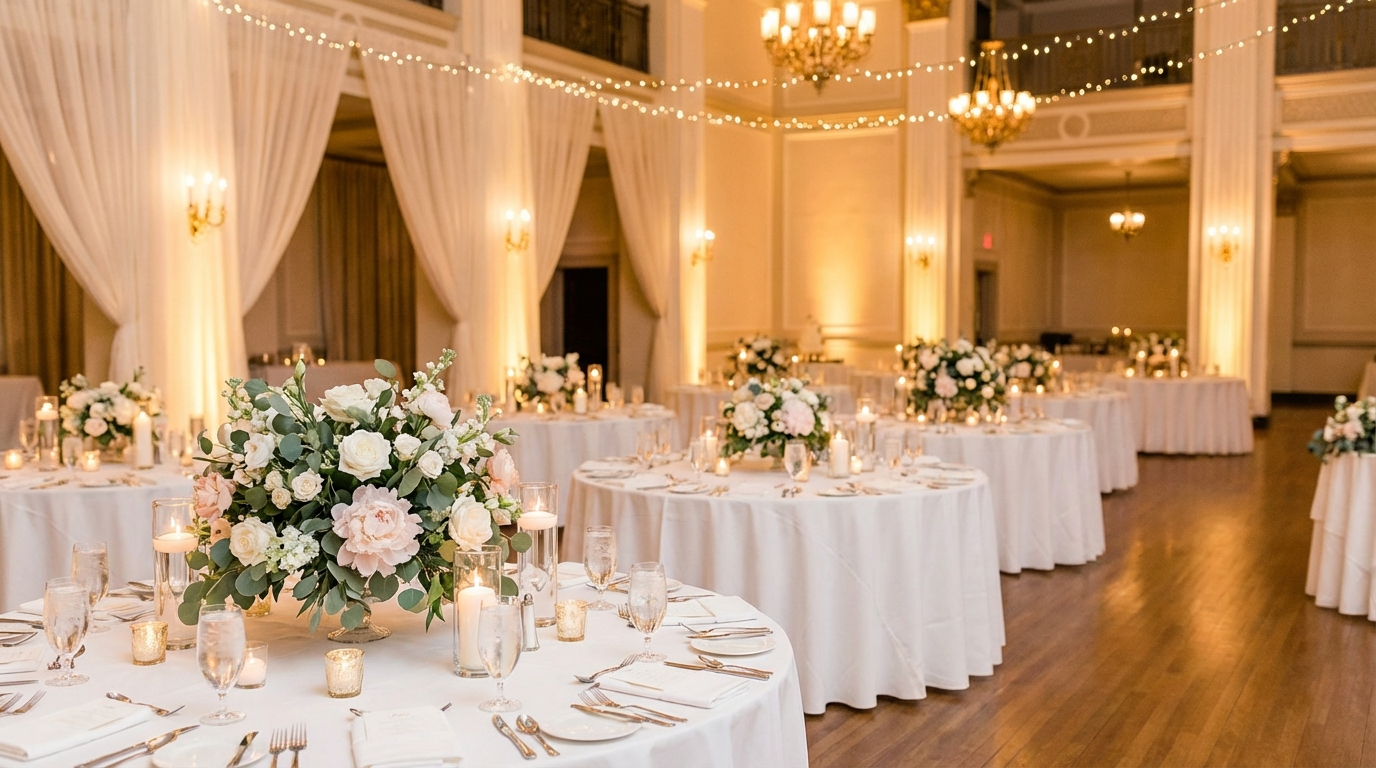
Corporate events prioritize networking, presentations, and professionalism. The layout should encourage movement and conversation while maintaining sight lines to any stage or screen.
Conference-Style
Rows of chairs facing a stage/podium. Best for keynotes, presentations, and town halls. Allow 6 square feet per seat. Leave a center aisle (4 feet wide) and side aisles (3 feet).
Banquet Round + Stage
Round tables of 8 with a front stage area. Best for awards dinners, galas, and team events. This is the most popular corporate layout because it combines dining with presentations. Position tables so no one has their back to the stage — use a half-moon arrangement if needed.
Cocktail-Style
Mix of high-top cocktail tables (30-inch round) and lounge furniture. No assigned seating. Best for networking events and happy hours. Allow 10 square feet per person. Place food stations and bars at opposite ends to create foot traffic throughout the room.
💡 Pro Tip: For corporate events with a presentation component, never place a table directly in front of the screen. Those guests will crane their necks all night. Leave a 10-foot buffer zone between the front row of tables and the stage.
Birthday & Milestone Party Layout
Birthday parties are flexible — the layout depends on whether you're doing a sit-down dinner, buffet, or cocktail-style celebration.
Sit-Down Birthday Dinner
- Guest of honor's table: Largest table, center position
- Guest tables: Round or rectangular depending on vibe (rounds = social, rectangles = intimate)
- Gift/cake table: Near the guest of honor but not blocking traffic
- DJ or playlist speaker: Corner position, not overpowering dinner conversation
Open Floor Birthday (Dancing Focus)
- Tables along the walls — maximize the center dance floor
- Cocktail tables scattered for standing groups
- Photo booth area in a corner with good lighting (see our photo booth guide)
- Food station buffet-style along one wall
Quinceañera Layout
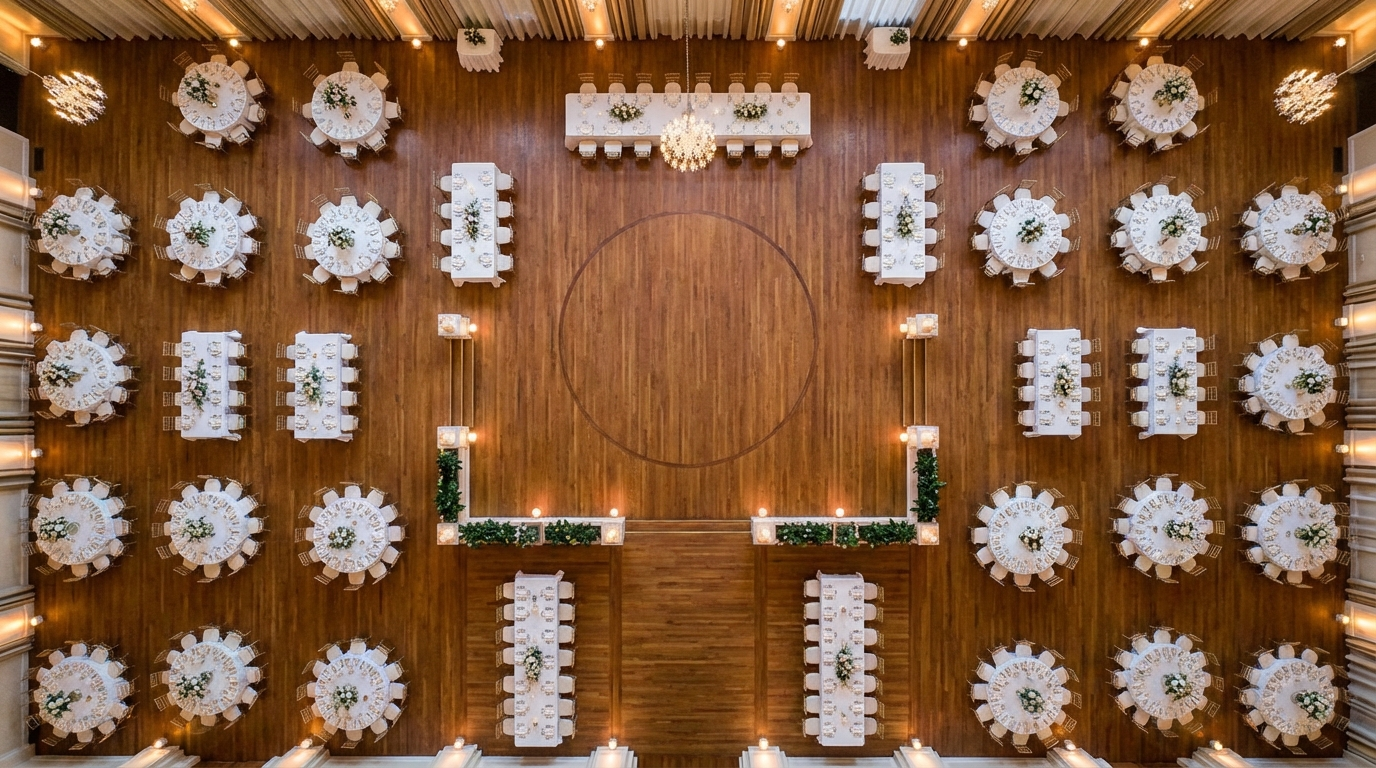
Quinceañeras need space for the traditional dances, court presentation, and a central table for the quinceañera and her court. Check our detailed quinceañera floor plan guide for specifics, but the basics:
- Main table for the quinceañera + court of honor (often a long rectangular table, 14-16 seats)
- Large dance floor — the waltz and group dances need at least 20x20 feet
- DJ stage with lighting rig area
- Guest tables arranged to face the dance floor and main table
Spacing Cheat Sheet
| Element | Minimum Space | Comfortable Space |
|---|---|---|
| Between round tables (edge to edge) | 5 feet | 6 feet |
| Aisle width | 36 inches | 48 inches |
| Table to wall | 3 feet | 4 feet |
| Buffet line clearance | 3 feet in front | 4 feet in front |
| Dance floor per dancer | 3 sq ft | 4.5 sq ft |
| Bar queue area | 6 feet deep | 8 feet deep |
| Stage to first table | 8 feet | 10 feet |
💡 Pro Tip: Use our free Event Floor Planner to test your layout before the event. Drag tables, dance floors, and stations around until the spacing feels right. It's way easier than measuring tape on event day.
Common Mistakes to Avoid
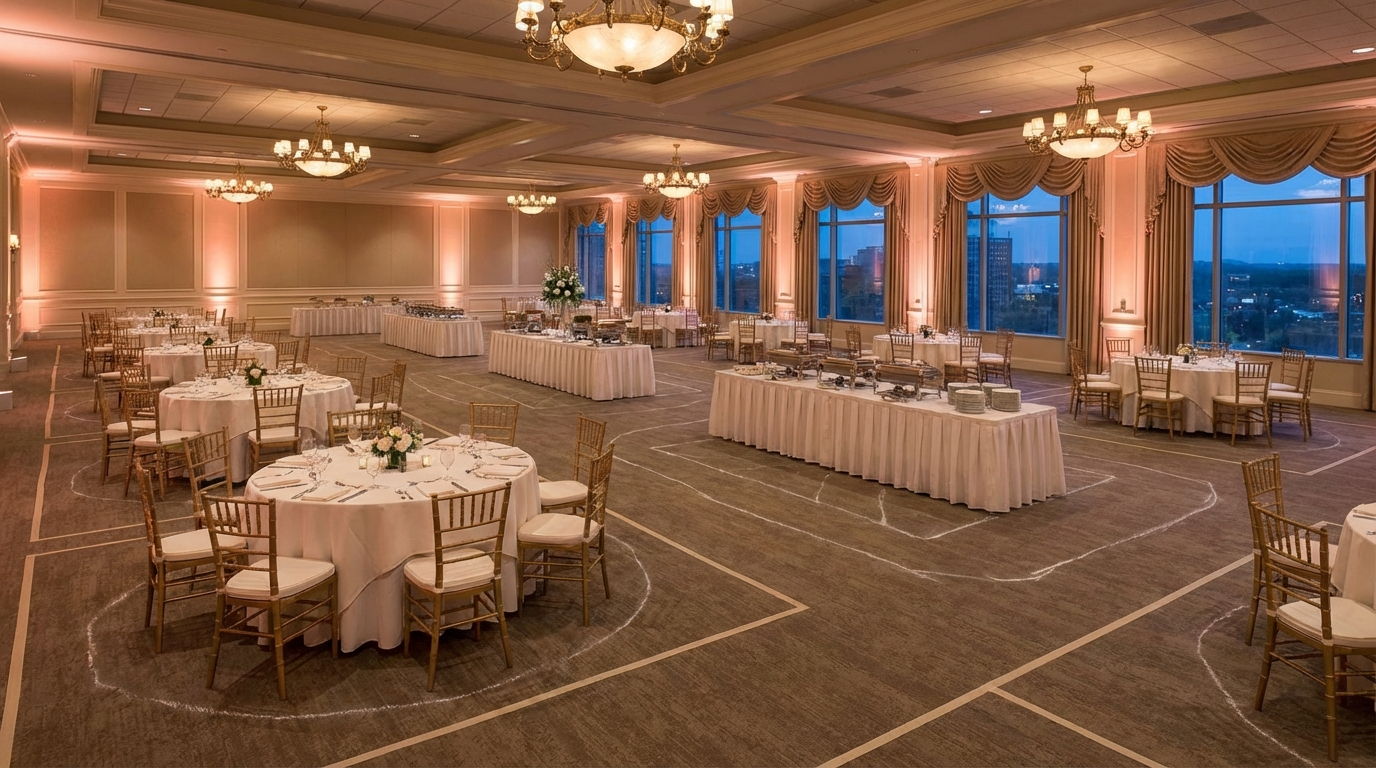
- 1Forgetting the bar queue. People cluster around bars. Leave 6-8 feet of open space in front of any bar.
- 2Blocking the entrance. Guests should see the whole room when they walk in — don't put a table right in front of the door.
- 3Cramming too many tables. It's always better to cut 1-2 tables than to pack them in. Cramped = miserable.
- 4Ignoring the DJ/band sight line. Every guest should be able to see the entertainment without craning their neck.
- 5Putting the dance floor in the back. The dance floor should be CENTRAL, not in a corner. People dance when they see others dancing — visibility is everything.
✨ Ready to plan your layout? Use our free Event Floor Planner to drag-and-drop your exact setup — no signup required!
Design Your Perfect Event Layout
Drag-and-drop floor planning with real furniture dimensions, guest seating, and instant sharing.
Try Event Floor Planner FreeFrequently Asked Questions
Written by
Event Floor Planner Team
Helping event planners create stunning floor plans and seating charts for weddings, corporate events, and special celebrations.
Stay in the Loop
Get expert event planning tips, layout ideas, and exclusive guides delivered weekly.
No spam. Unsubscribe anytime.
Related Articles
The Rooftop Umbrellas for Shade During Daytime Event Secrets Venues Don't Share
Your Daytime Event Is Fighting the Sun. And Losing. You've booked the perfect rooftop venue. The skyline views are stunning. The vibe is immaculate. Then 2 PM hits and your guests are squinting, s...
The Barn Loft Railing Height Safety for Guests Secrets Venues Don't Share
Your Barn Wedding Has a Hidden Danger You found the perfect rustic barn venue. Exposed beams. String lights. That charming loft overlooking the dance floor. It looks magical in photos. But here...
The Science Behind Effective Award Show Backstage Green Room Access Route
Your Green Room Access Route is a Nightmare Waiting to Happen You've spent months planning an award show. The stage design is flawless. The talent list is stacked. But have you thought about how yo...