Nonprofit Event Layout: A Practical Guide for 2026
Planning a successful nonprofit event in 2026 requires more than just a good cause; it demands strategic planning, especially when it comes to your event layout. A well-designed layout can significantly impact donor engagement, streamline event flow, and ultimately, boost your fundraising efforts. Are you ready to maximize your impact?
This guide dives deep into creating effective nonprofit event layouts in 2026. We'll cover everything from understanding your audience and choosing the right venue, to optimizing seating arrangements and incorporating technology. By the end, you'll have the knowledge and tools to design a layout that not only looks great but also contributes to the success of your event.
Let's get started and make your next nonprofit event a resounding success!
Key Takeaways
- A well-planned event layout enhances the donor experience and increases engagement.
- Understanding your audience and event goals is crucial for effective layout design.
- Utilizing tools like EventFloorPlanner.com can simplify and optimize the layout process.
Understanding Your Audience and Event Goals
Before you even think about tables and chairs, you need to understand your audience. Who are you trying to reach? What are their expectations? Tailoring your event to your audience will make them more comfortable and receptive to your message. Are your attendees primarily older donors, or are you targeting a younger, more tech-savvy crowd?
Next, define your event goals. What do you want to achieve? Is it primarily fundraising, awareness building, or donor appreciation? Your goals will directly influence your layout choices. A fundraising gala will have a different layout than a casual awareness-building event. Consider the flow of the event: registration, cocktail hour, presentations, and any activities. Each stage requires careful planning to ensure a seamless experience.
Think about the overall atmosphere you want to create. Formal or relaxed? Intimate or grand? These considerations will guide your decisions on everything from lighting to seating arrangements. A clear understanding of your audience and goals forms the foundation of a successful event layout.
Choosing the Right Venue for Your Nonprofit Event
Selecting the right venue is paramount. It's not just about aesthetics; it's about functionality and suitability for your event goals. Does the venue have enough space for your anticipated number of attendees? Consider not just seating capacity, but also space for registration, catering, and any planned activities. Use a venue capacity calculator to estimate your space needs.
Think about the venue's layout possibilities. Can you easily arrange the space to suit your needs? Are there any fixed elements, like pillars or stages, that might limit your options? Accessibility is also crucial. Ensure the venue is accessible to all attendees, including those with disabilities. This includes ramps, elevators, and accessible restrooms.
Don't forget about the practical aspects: parking, transportation options, and proximity to accommodations. A convenient location will make it easier for people to attend and enjoy your event. Tour potential venues and visualize your event in the space. This will help you identify any potential challenges and ensure the venue is a good fit.
Creating a Floor Plan: Step-by-Step Guide
Now, let's get practical! Creating a floor plan can seem daunting, but with the right tools and approach, it's manageable. EventFloorPlanner.com offers a free and easy-to-use platform that simplifies the process. Here's a step-by-step guide:
Measure Your Space
Accurate measurements are essential. Measure the length and width of the venue, noting any fixed elements like pillars, doors, and windows. Create a rough sketch of the venue layout.
Choose Your Layout Style
Consider different layout styles: theater-style seating, banquet-style tables, classroom-style rows, or a cocktail reception setup. Choose the style that best suits your event goals and audience.
Utilize EventFloorPlanner.com
Open EventFloorPlanner.com and input your venue dimensions. Drag and drop elements like tables, chairs, stages, and bars to create your layout. Experiment with different arrangements until you find the optimal design.
Consider Traffic Flow
Ensure there's enough space for attendees to move freely between different areas. Avoid creating bottlenecks or crowded areas. Think about the flow of people from registration to seating to activities.
Add Details
Include details like placement of audio-visual equipment, lighting fixtures, and decorations. This will help you visualize the final setup and ensure everything fits properly.
Review and Revise
Once you've created your floor plan, review it carefully. Get feedback from your team and make any necessary revisions. Ensure the layout meets your event goals and accommodates your attendees comfortably.
Optimizing Seating Arrangements for Engagement
Seating arrangements can significantly impact engagement. A poorly planned seating arrangement can leave attendees feeling isolated and disconnected, while a well-designed arrangement can foster interaction and connection. Consider these strategies:
- Mix and Match: Avoid segregating attendees by age or background. Mix and match people to encourage new connections and conversations.
- Strategic Placement: Place key donors or VIPs in prominent locations, such as near the stage or speaker. This shows them respect and appreciation.
- Table Size: Choose table sizes that encourage conversation. Tables that are too large can make it difficult for people to interact.
- Consider Sightlines: Ensure everyone has a clear view of the stage or presentation area. Avoid obstructions like pillars or tall decorations.
- Use Name Tags: Clear and visible name tags help people identify each other and start conversations.
Think about the flow of conversation. Round tables encourage interaction, while rectangular tables can be more formal. Experiment with different arrangements to find the best fit for your event. Don't be afraid to ask attendees for feedback after the event. This will help you improve your seating arrangements in the future.
Incorporating Technology into Your Event Layout
In 2026, technology plays a crucial role in enhancing the event experience. Integrating technology into your nonprofit event layout can boost engagement, streamline operations, and create a memorable experience for attendees. Consider these tech-savvy additions:
- Interactive Displays: Use interactive displays to share information about your organization, showcase success stories, and collect donations.
- Digital Signage: Replace traditional signs with digital signage to provide real-time updates, event schedules, and wayfinding information.
- Mobile Event App: Create a mobile event app that provides attendees with access to the event schedule, speaker bios, maps, and networking opportunities.
- Live Streaming: Offer a live streaming option for attendees who cannot attend in person. This expands your reach and allows more people to participate in your event.
- Social Media Integration: Encourage attendees to share their experiences on social media using a dedicated event hashtag. Display a live social media feed on a screen to showcase attendee engagement.
Don't overwhelm attendees with technology. Use it strategically to enhance the event experience, not distract from it. Ensure you have adequate Wi-Fi coverage to support all the technology you're using. Also, provide tech support to help attendees who may need assistance.
Creating a Welcoming Registration Area
The registration area is the first impression your attendees will have of your event. Make it a positive one! A well-organized and welcoming registration area can set the tone for the entire event. Here are some tips:
- Clear Signage: Use clear and visible signage to guide attendees to the registration area.
- Multiple Check-In Stations: Set up multiple check-in stations to minimize wait times.
- Friendly Staff: Train your staff to be friendly, helpful, and efficient.
- Comfortable Waiting Area: Provide a comfortable waiting area with seating and refreshments.
- Information Packets: Prepare information packets with the event schedule, speaker bios, and other relevant information.
Consider offering pre-registration to speed up the check-in process. Use technology to streamline registration, such as QR codes or mobile check-in. Make sure the registration area is well-lit and accessible. A smooth and efficient registration process will leave attendees feeling welcomed and valued.
Lighting and Ambiance: Setting the Mood
Lighting and ambiance play a crucial role in setting the mood for your event. The right lighting can create a warm, inviting atmosphere, while the wrong lighting can make attendees feel uncomfortable and unengaged. Consider these lighting techniques:
- Ambient Lighting: Use ambient lighting to provide overall illumination to the space.
- Accent Lighting: Use accent lighting to highlight key features, such as the stage, decorations, or artwork.
- Task Lighting: Use task lighting to provide focused illumination for specific tasks, such as reading or writing.
- Color Temperature: Choose a color temperature that complements the event's theme and atmosphere. Warm lighting creates a cozy atmosphere, while cool lighting creates a more formal atmosphere.
- Dimmable Lights: Use dimmable lights to adjust the brightness and create different moods throughout the event.
Think about the event's theme and the message you want to convey. Use lighting to create a specific atmosphere and enhance the overall experience. Don't underestimate the power of lighting to transform a space and create a memorable event.
Nonprofit Event Layout: Example Setups
Let's look at some example layouts for different types of nonprofit events:
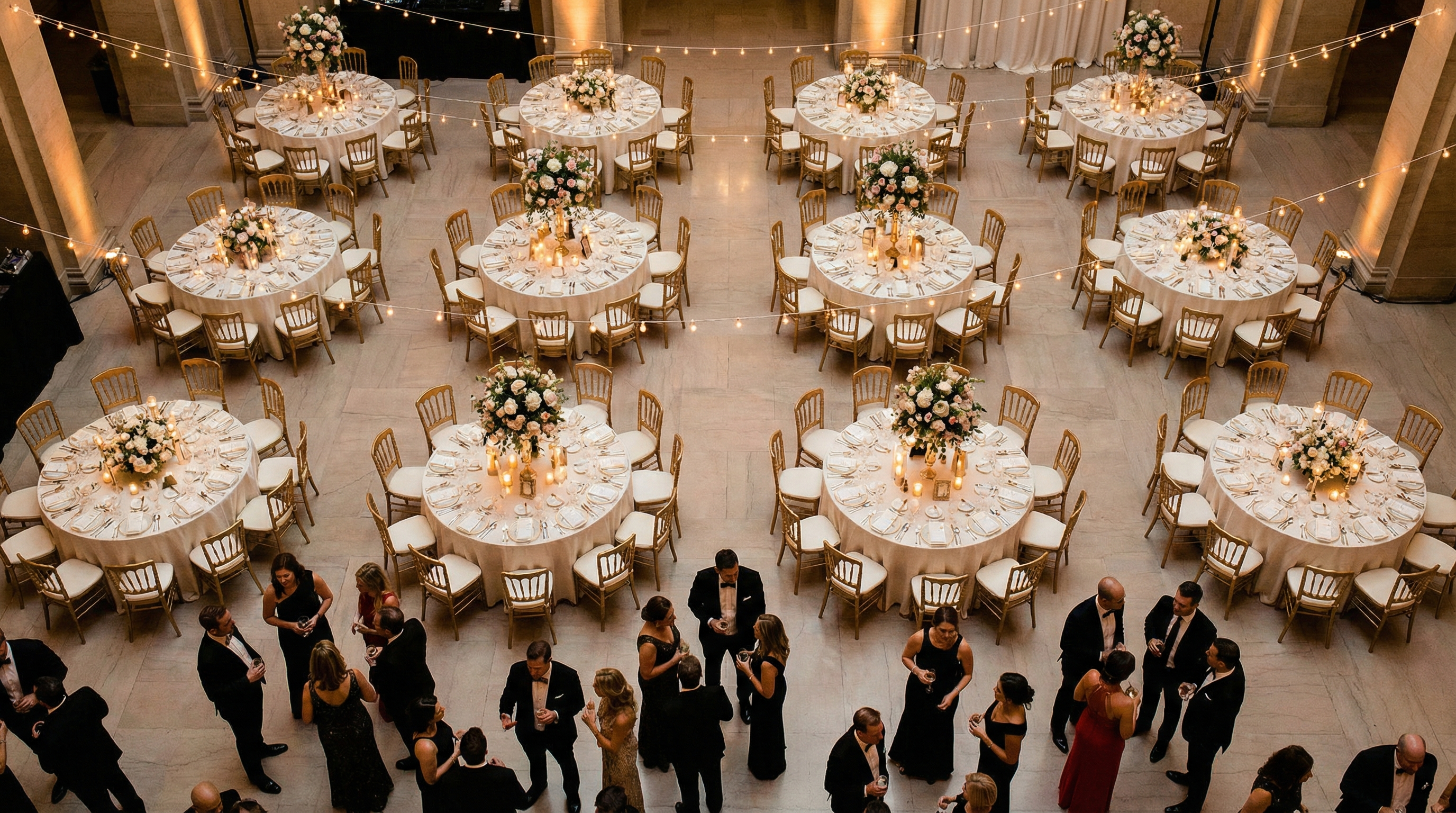
- 1Fundraising Gala: Banquet-style seating with round tables to encourage conversation. A stage for presentations and entertainment. A silent auction area with clearly displayed items.
- 2Awareness-Building Event: A more casual setup with cocktail tables and lounge seating. Interactive displays and information booths. A designated area for networking and socializing.
- 3Donor Appreciation Event: A formal dinner with assigned seating. A program honoring key donors and volunteers. A relaxed and intimate atmosphere.
Remember, these are just examples. The best layout for your event will depend on your specific goals, audience, and venue. Use these examples as a starting point and adapt them to your unique needs. You can find free templates on EventFloorPlanner.com to help get you started.
"The key to a successful event layout is to prioritize the attendee experience. Think about how people will move through the space and how you can create a welcoming and engaging environment." - John Smith, Event Planner
Common Mistakes to Avoid
Even with careful planning, it's easy to make mistakes when designing your event layout. Here are some common pitfalls to avoid:
- Insufficient Space: Overcrowding can make attendees feel uncomfortable and overwhelmed. Ensure you have enough space for everyone to move freely.
- Poor Traffic Flow: Bottlenecks and crowded areas can disrupt the event flow. Design the layout to ensure smooth traffic flow between different areas.
- Obstructed Sightlines: Ensure everyone has a clear view of the stage or presentation area. Avoid obstructions like pillars or tall decorations.
- Inadequate Lighting: Poor lighting can make attendees feel uncomfortable and unengaged. Ensure you have adequate lighting for all areas of the event.
- Ignoring Accessibility: Failing to provide accessible accommodations can exclude attendees with disabilities. Ensure the venue is accessible to everyone.
Expert Tips for a Successful Nonprofit Event Layout
Here are some expert tips to help you create a truly successful event layout:
- Prioritize the Attendee Experience: Every decision you make should be focused on creating a positive and engaging experience for attendees.
- Use Visual Aids: Create visual aids, such as renderings or 3D models, to help you visualize the layout and identify potential problems.
- Get Feedback: Solicit feedback from your team, volunteers, and even potential attendees. This will help you identify areas for improvement.
- Be Flexible: Be prepared to make adjustments to the layout as needed. Things don't always go according to plan, so be flexible and adaptable.
- Plan for the Unexpected: Have a plan in place for dealing with unexpected issues, such as inclement weather or equipment malfunctions.
"A well-designed event layout is an investment in the success of your event. It can enhance the attendee experience, boost engagement, and ultimately, help you achieve your fundraising goals." - Jane Doe, Nonprofit Consultant
Frequently Asked Questions
Written by
Event Floor Planner Team
Helping event planners create stunning floor plans and seating charts for weddings, corporate events, and special celebrations.
Stay in the Loop
Get expert event planning tips, layout ideas, and exclusive guides delivered weekly.
No spam. Unsubscribe anytime.
Related Articles
How to Nail Your Event Flow and Traffic Patterns Every Time
Why Your Event Flow and Traffic Patterns Matter More Than You Think You've planned the perfect menu. The playlist is fire. The decorations look incredible. But when guests arrive, they bottleneck...
Everything You Need to Know About Fire Code Occupancy Event Seating
Why Fire Code Occupancy Event Seating is Non-Negotiable You've spent months planning your event. The guest list is finalized. The menu is set. The playlist is perfect. Then the fire marshal wal...
The Complete Accessible Seating Requirements Events Planning Guide (2026)
Introduction: Why Accessible Seating is Non-Negotiable in 2026 You’ve planned the perfect event. The food is amazing. The music is on point. The decor is stunning. But what happens when a guest in...